
Fragments explore how queer intimacy have existed
across dispersed spaces, challenging the assumption
that intimacy belongs within a single domestic unit and
the division between private and public space.
Through interviews and memory drawings, spatial
fragments are extracted from spaces associated with
intimacy and transformed into furniture consisting of
abstracted fragments from these memories. By queering
walls and partitions, the project reveals histories of
belonging while questioning the social norms embedded
within architecture.
Fragment #01, a bench made with plastered walls and wall frames. The form is extracted and abstracted from queer people's intimate memories. The walls aren't used as a conventional architectural element providing enclosure and division but instead are exposed and fragmented.
OSB, Polyfilla, Mild Steel, Aluminium U Tracks, Leather

Fragment #01, a bench made with plastered walls and wall frames. The form is extracted and abstracted from queer people's intimate memories. The walls aren't used as a conventional architectural element providing enclosure and division but instead are exposed and fragmented.


Fragment #02, a stool featuring a leather curtain in the back that raps around which gives agency to the user regarding how private or public they want to be. The form is extracted and abstracted from queer people's intimate memories.
Pine, Mild Steel, Leather
Fragment #02, a stool featuring a leather curtain in the back that raps around which gives agency to the user regarding how private or public they want to be. The form is extracted and abstracted from queer people's intimate memories.
Pine, Mild Steel, Leather


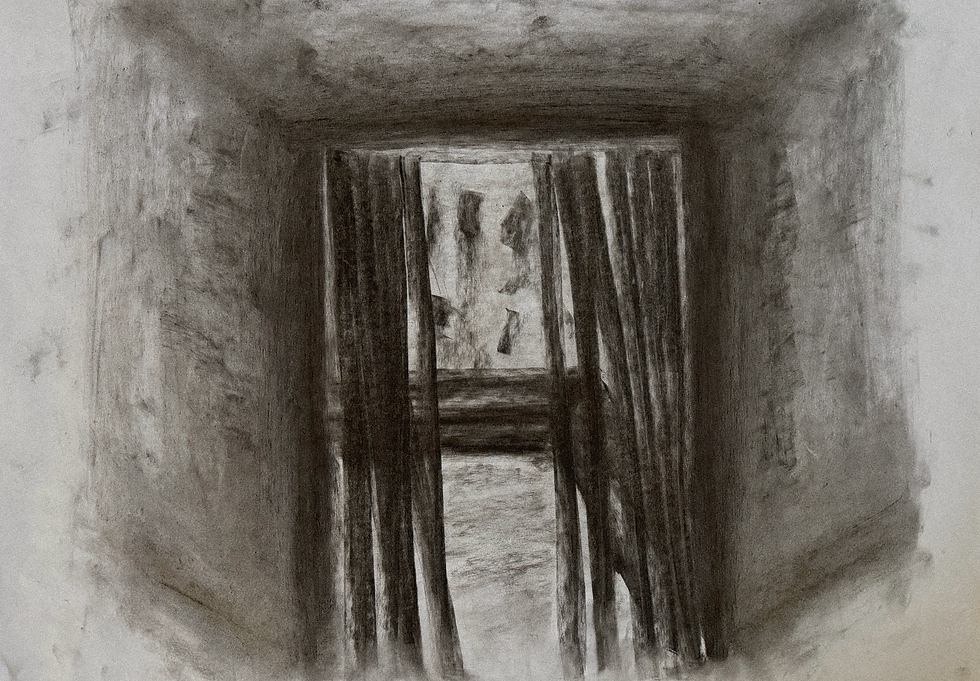


Process:
Memory drawings of queer people interviewed.
They were asked about the architecture and setting of their intimate memories rather than the acts. The drawings were formed based on listening to their descriptions, similar to police sketches.


Based on how queer care and intimacy are fragmented, 'fragments' are used a lens to look at the project and are a part of its design methodology.
The architectural fragments of the memories are focused on and forms are extracted to be abstracted. They are used to inform the designs.


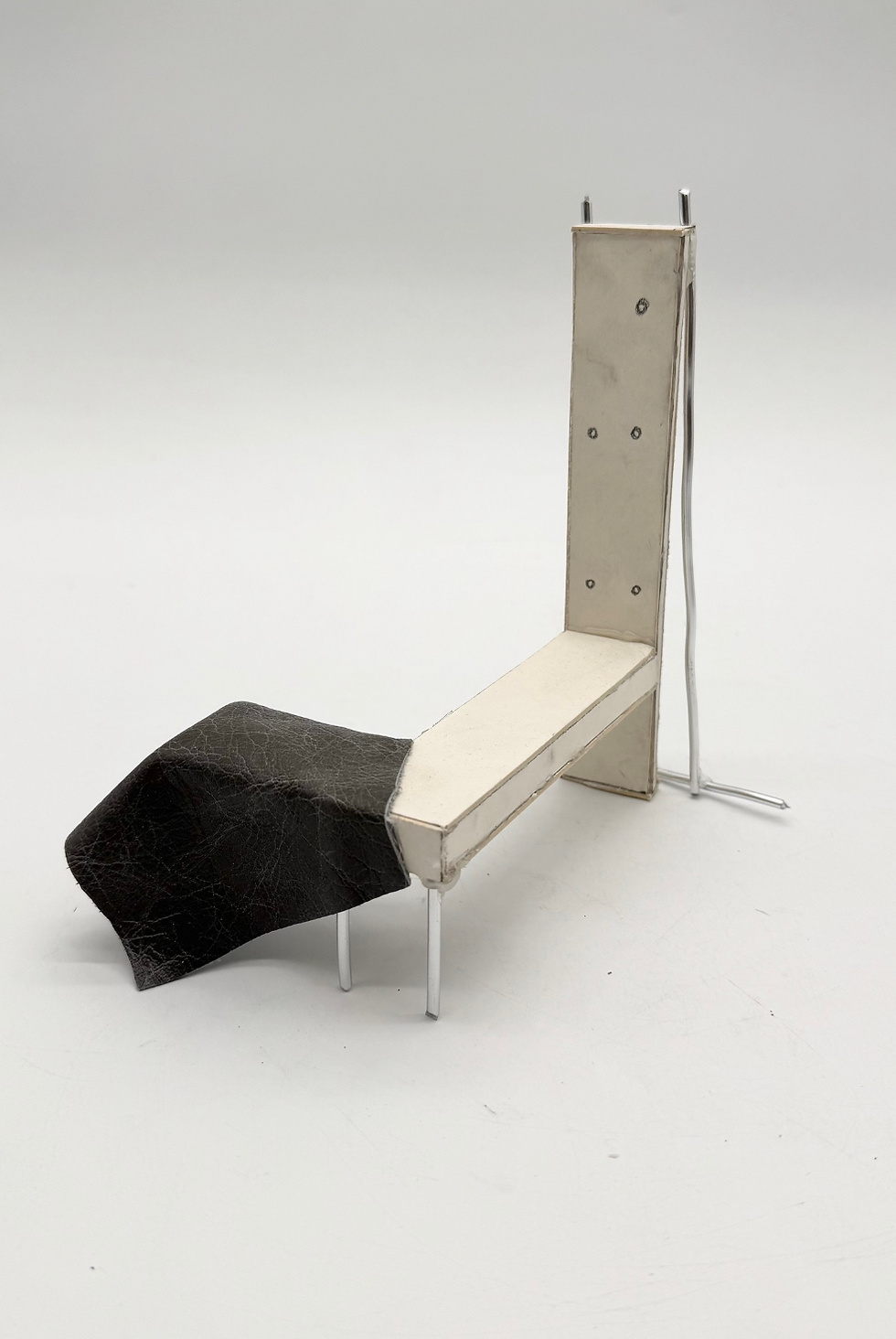


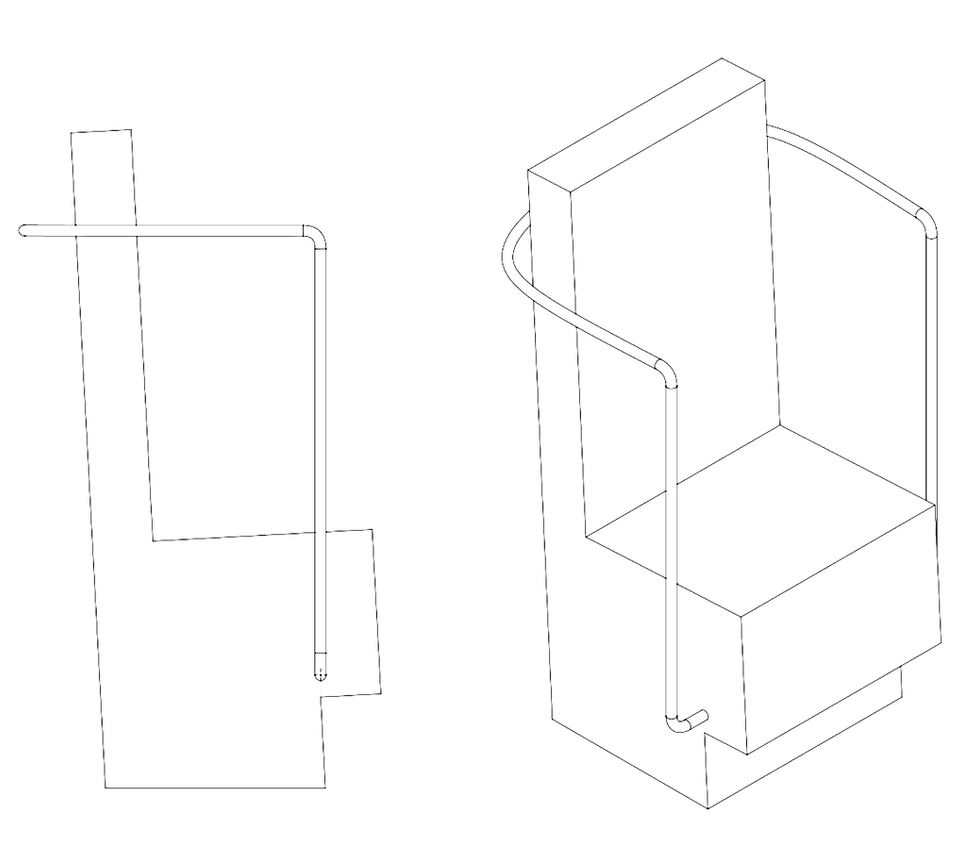
Modelling and iteration.
Abstracting the extracted spatial fragments, looking at ways of exposing and providing agency over privacy.


