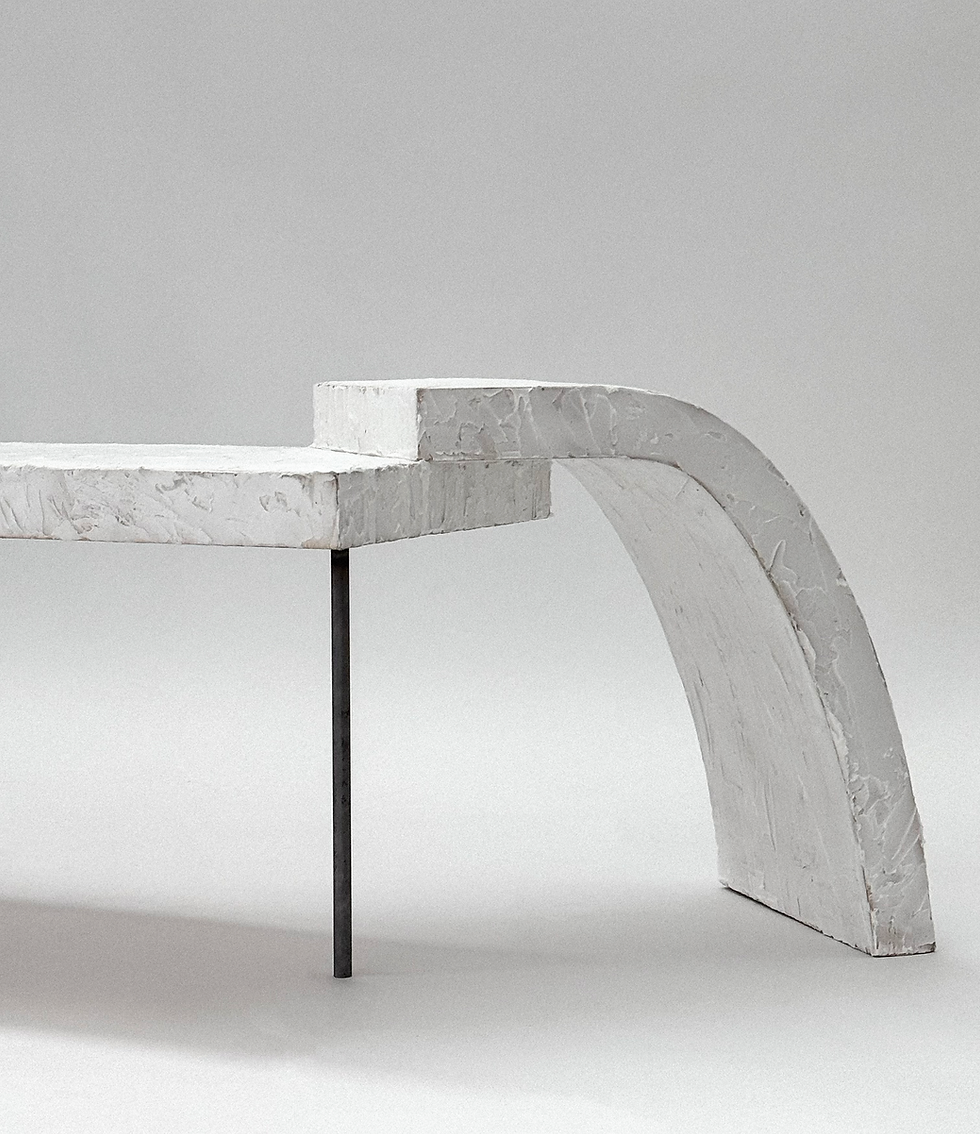
Fragment #0 is the initial step of challenging the traditional division between private and public space, questioning architecture’s role in defining where intimacy and care can occur which fed into the creations of Fragments #1 and #2.
Focusing on architectural elements such as walls, the project investigates how spatial boundaries reinforce social norms and structures of visibility and exclusion. Through focusing on a fragment of a wall, the project aims to start reimagining walls as not spatial dividers, but exposed and deconstructed elements reflecting the traces of care and intimacy they once might've hosted. The rigid divisions are transformed into softened, relational forms that bend and merge, where the wall becomes exposed, and intimate itself. In doing so, the wall shifts from a structure of separation to one that reveals and materializes the dispersed, fragmented, and often unseen nature of queer belonging.
OSB, Polyfilla, Mild Steel, Aluminium U Tracks, Leather

A once complete panel of a wall is fragmented into two pieces, slipped
out of its frame. The smaller one hugs, wraps around the bigger one,
resting its head on the other’s knee.
The frame is left exposed.


Process:
Focusing on fragments of architecture in public and private spaces, experimenting with photography to inform the design direction.
Fragment photograph #01

Fragment photograph #02

Fragment photograph #03

Fragment photograph #04

Fragment photograph #05


Scaled model iterations of forms informed by the fragments in the photography experiment.


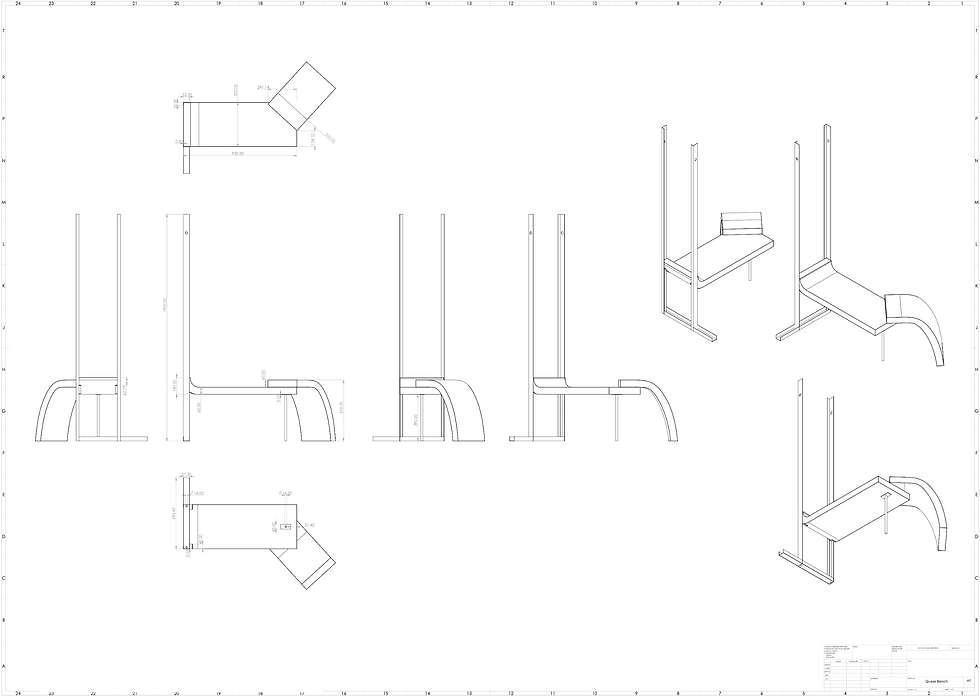
Drawings and iterations of designs.


Drawings and iterations of designs.
Incorporating U tracks and C studs to balance wall-like realism within the abstracted design.